Recognizing a returning caller is a trust problem
Every business with a phone line knows the moment. A customer calls back about an order, a booking or a bill, and expects the person, or the agent, on the other end to remember the story so far. Making an AI phone agent do that is easy to promise and risky to do badly. Caller ID can be spoofed, numbers get written in half a dozen formats, and a caller's history is private information. HellouOne's contact memory work (HEL-497, HEL-498 and HEL-502) was built around that tension: give returning callers real continuity, and give everyone else nothing that is not theirs.
History opens only after a one-time code
On inbound calls, the AI agent now opens a caller's history only after a one-time code passes. Until that check succeeds, the number on the caller ID does not count as a verified phone. That distinction sounds technical, but it is the whole point. A displayed number is a claim, not a proof, and treating it as proof would let anyone who can fake a number ask an agent about someone else's orders, balances or appointments. With the code verified, the agent can safely bring the caller's context into the conversation. Without it, the agent helps with general questions and keeps the history closed. Outbound calls work the other way around: when your business dials a number, that dialled number is treated as verified for the call, because your team chose it.
Same person, however the number is written
Phone numbers rarely arrive in one clean format. Customers save them with a country code, without one, with spaces, with a leading zero, or copied from an old invoice. Contact memory now matches phone variants, so the same person is recognized across those formats instead of being split into several half-empty contacts. That matching is what makes memory useful in practice. A caller who confirmed an order from one format and calls back from another is still the same customer, and the agent can pick up the thread instead of starting a brand new profile and asking everything again.
A spoken opt-out is an opt-out
During a call, people say things like "stop calling me" in plain words, not through a settings page. A spoken opt-out is now honored by the agent's memory and calling behavior. Respecting that sentence is both a compliance duty and a basic courtesy, and it only works if the system records it where future calls will actually look. The same discipline applies to what memory keeps: the agent's memory stores only the commitments the business made. Promises like "we will call you back on Friday" or "your refund was approved" belong in memory, because the next agent, human or AI, needs to honor them. Casual chatter does not need to follow a customer forever.
Digests that feed the memory
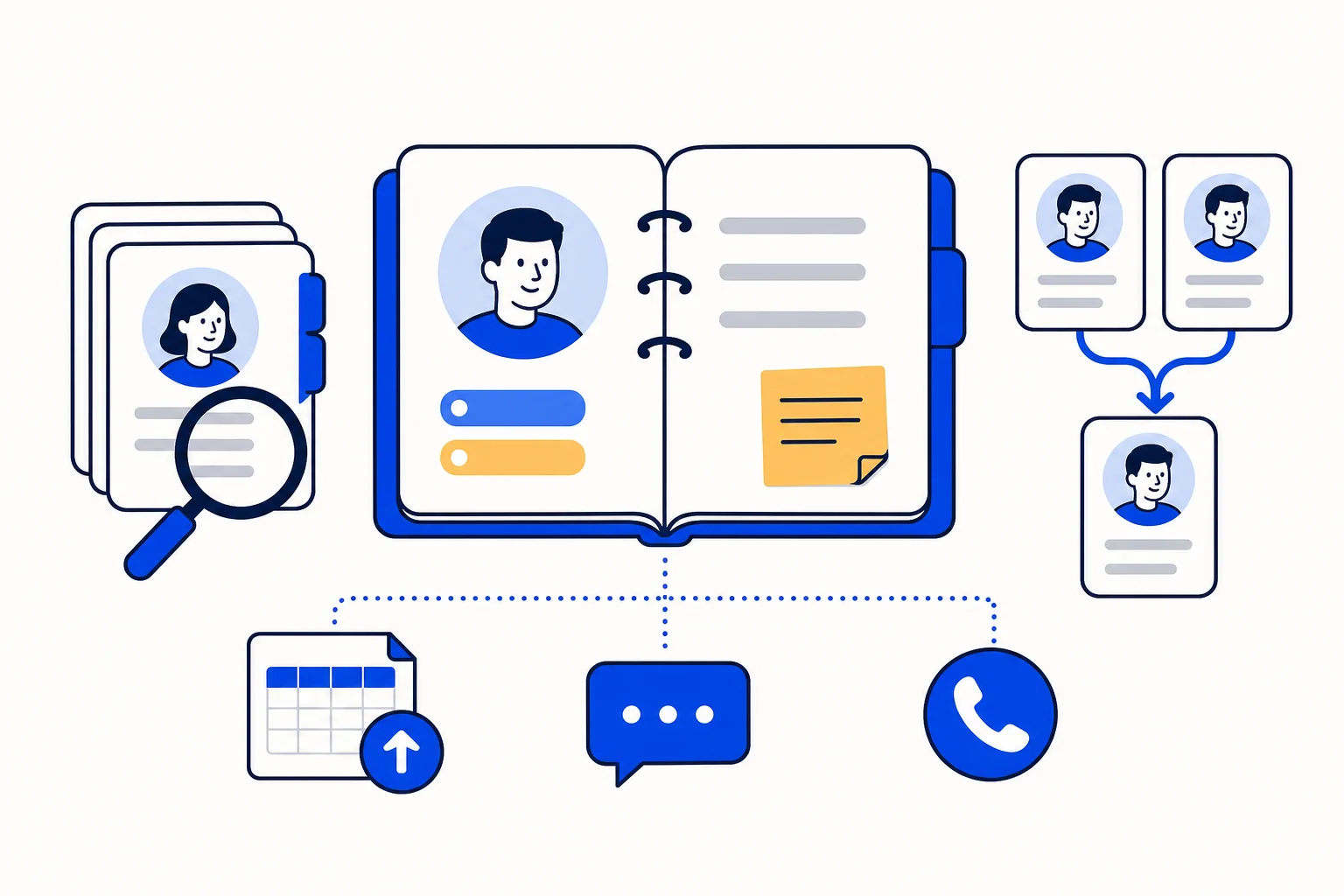
Conversations now get stored summaries, chat digests, that feed contact memory. Instead of a future agent rereading every raw transcript to work out what happened, the digest carries the essentials: what was asked, what was decided, what was promised. When a customer returns, the next agent, bot or human, starts from that summary and can greet them with context instead of amnesia. This is also what makes handoffs warmer. A human agent taking over a returning customer's case sees the same memory the AI used, so the customer does not have to repeat the story for a third time.
Clear rules for what the agent may say
The help documentation now states plainly what the agent may say in each call direction. That clarity matters as much as the code. Teams configuring an AI phone line should not have to guess which facts the agent can share with an unverified caller, which ones open up after verification, and which ones belong only to outbound conversations with a number the business dialled on purpose. Written rules turn a vague worry about privacy into a checklist you can review, train on and audit.
Why it matters
Continuity is the reason customers forgive a lot of things, and identity mistakes are the fastest way to destroy that trust. An agent that remembers everything but checks nothing is a privacy incident waiting for a phone call. An agent that checks everything but remembers nothing is just a menu with a voice. Contact memory in HellouOne aims at the middle: verify first with a one-time code, match the number however it is written, honor a spoken opt-out, keep the commitments your business made, and summarize each conversation so the next one starts smarter. If you run an AI phone line on HellouOne, that memory is working on your calls now.