An outbound campaign is only as good as the conversations it starts with the right people. A call that reaches a receptionist, a colleague or a family member instead of the person you meant to reach is not a success, even if it lasted two minutes. For business campaigns in particular, the goal is to reach the person who decides.
This release changes how HellouOne AI agents open and steer outbound calls so that more of them end with the right person, and so that the ones that do not are recorded honestly. Here is what changed and why it matters for your campaigns.
The contact speaks first
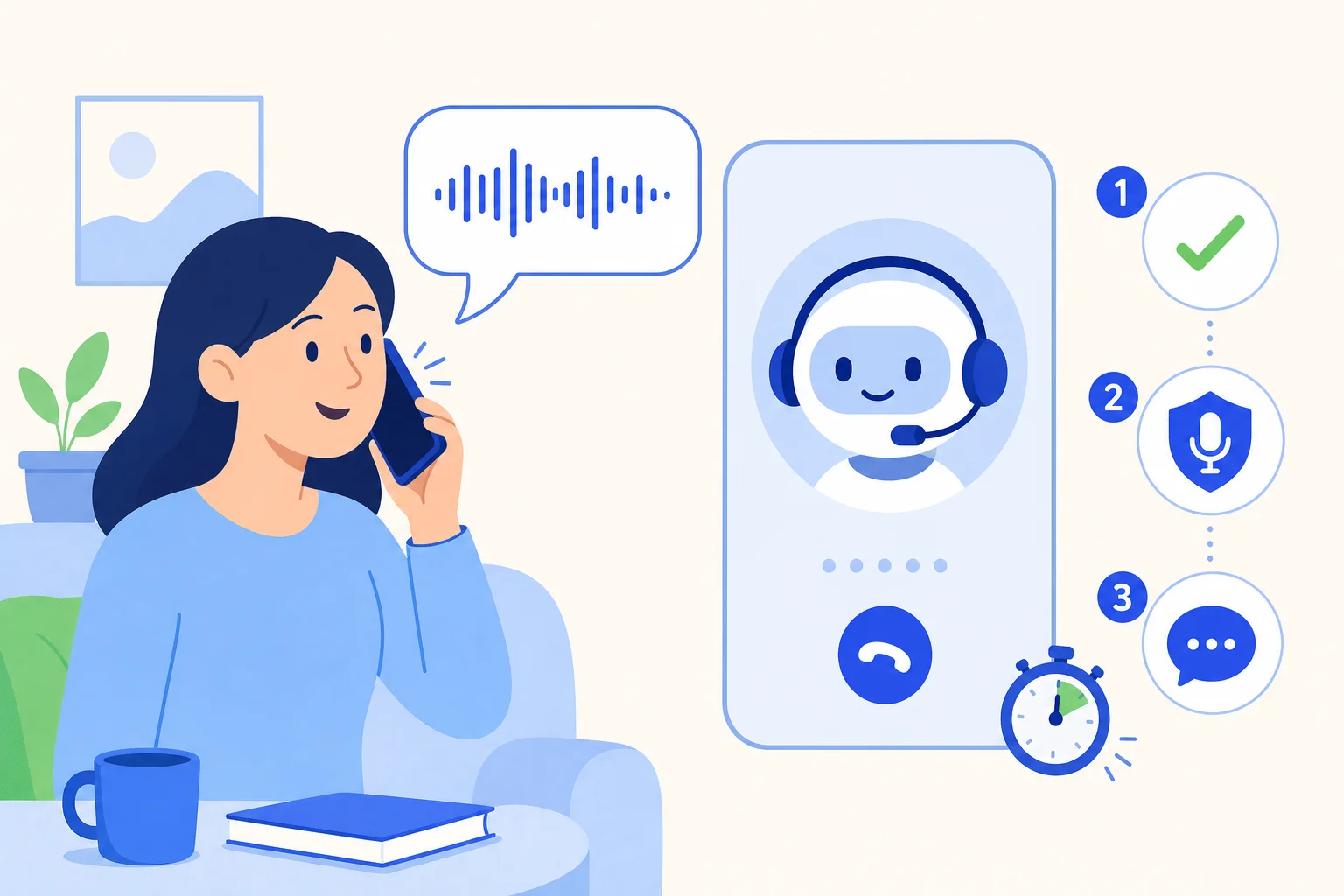
In outbound AI calls, HellouOne now waits for the contact to speak before saying anything. Most people answer a call with a hello or their name. Letting them go first avoids talking over them, and it gives the AI agent a moment to hear who picked up before it starts the conversation. We covered the first part of this behavior in outbound AI calls that wait and confirm who answered; this release builds on it.
It asks, it does not assume
After the contact speaks, the AI agent asks if it is speaking with the person on your list. It does not confirm itself as the contact: it asks, and the answer has to come from the person on the line. That small change keeps the agent from carrying on as if it had reached the right person when it has not.
No more repeated openings
Phone lines are messy. Sometimes the person says nothing for a second, sometimes there is traffic or wind in the background. Before, a silent or noisy turn could make the AI agent start its opening line again, which sounds robotic and wastes the first seconds of the call. Now the agent does not repeat the opening after those turns. It keeps the conversation moving instead.
Refusals and opt-outs are heard better
When someone says they are not interested, or asks not to be called again, the AI agent now picks that up more reliably. Respecting a no is good manners and good business. It protects your brand, keeps your lists clean and avoids calling people who already asked you to stop.
Wrong person, next contact
Business campaigns often list more than one contact at the same company. If the person who answers says they do not handle the matter, the call is now recorded as wrong person, and the campaign calls the next contact at that company. Instead of a dead end, the campaign keeps working its way toward the person who can actually make the decision.
Recording these calls as wrong person also matters for your numbers. A wrong person call is not counted as a successful conversation, so campaign results reflect who you really reached.
Who benefits
Sales teams calling companies, where reaching the decision maker is the whole point.
Collections and account teams, who need to speak with the person responsible for the account.
Anyone running B2B outreach with several contacts per company in the list.
Supervisors, who get results that separate real conversations from wrong person calls.
Tips to get the most out of it
Load more than one contact per company when you have them, ordered from most to least likely to handle the matter.
Keep the opening short. The AI agent now waits and asks first, so the first line does not need to explain everything.
Review wrong person calls after the first day. They often show that a list needs a better first contact.
How this works with HellouOne
These changes apply to outbound campaigns run by the HellouOne AI agent, with the instructions, knowledge and voice you already configured. Every call, including wrong person calls, appears in the call history and live call center panel, so supervisors can listen back and see how each one ended. When a contact wants to talk to a person, the AI agent follows your handover rules.
There is nothing to switch on. Your next outbound campaign will open by listening, ask before assuming, and move on to the next contact at the company when the first one is not the right person.