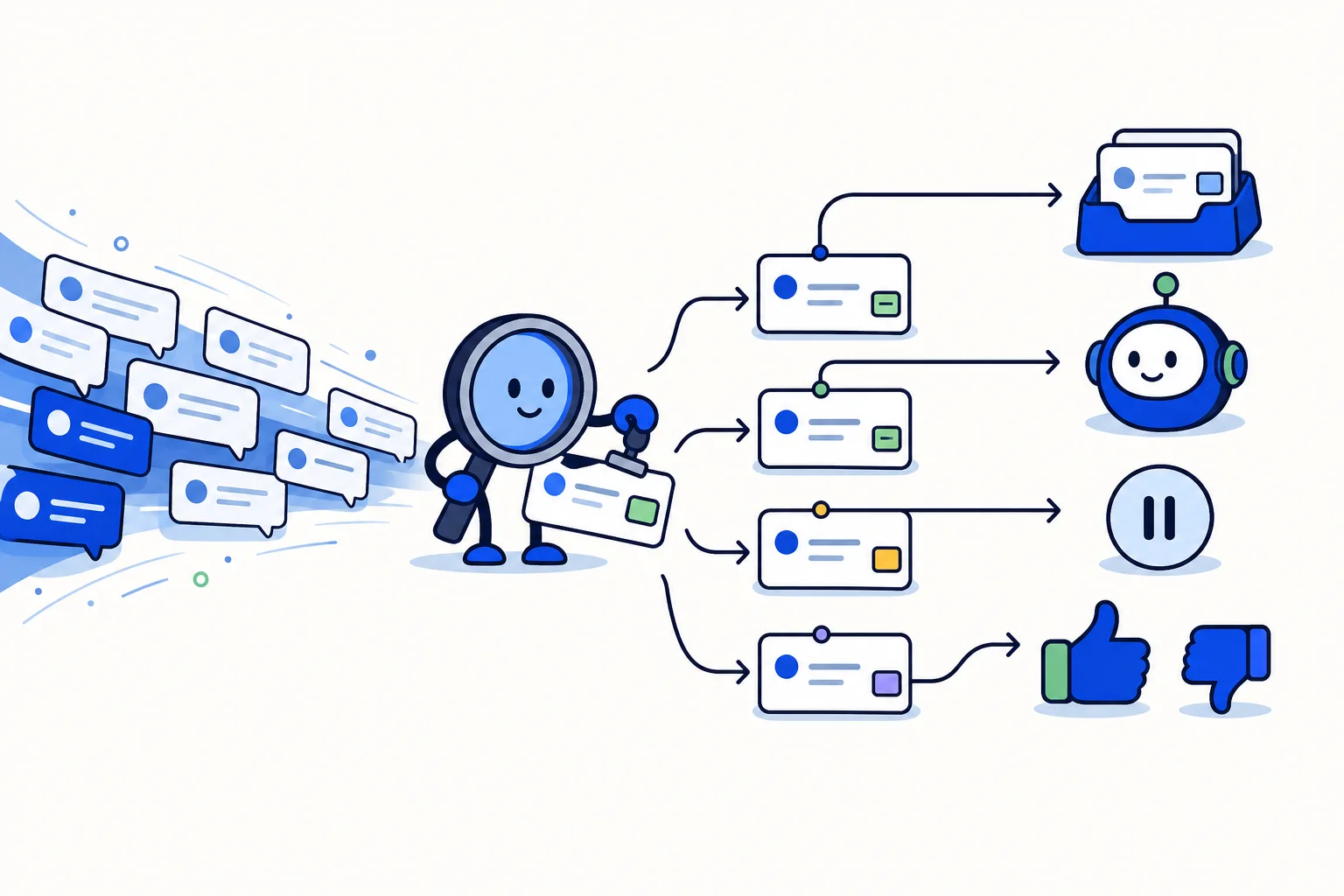
Between October 3 and 5, HellouOne shipped AI classifications: a small, fast model that reads every customer message as it arrives and attaches what it finds to the conversation. On its own that sounds modest. In practice it is the layer that lets several other things in the product behave sensibly, from where a message goes to whether a draft reply is safe to send. This post explains what the classifier does, where you will see it, and how to put it to work.
What the classifier reads
Every message that reaches a HellouOne inbox, on WhatsApp, web chat, email or social, passes through the classification model before anything else happens. The model is small by design: its job is not to write a reply but to answer a handful of questions about the message quickly and consistently. The answers feed six features:
Smart routing before the AI agent answers. The message is classified first, so a sales question can go to the sales inbox and a billing complaint to the person who handles billing, before an AI agent or a human has typed a word.
A reply check that holds risky drafts. When a draft reply looks risky, the check holds it for a person to review instead of letting it go out.
Customer sentiment. Each conversation carries a mood reading, surfaced in the inbox and in reports.
Campaign lead qualification. Replies to a campaign are classified so qualified leads stand out from the rest.
Prose opt-out detection. A customer who writes please stop messaging me in their own words, rather than tapping an opt-out button, is recognised and treated as opted out.
Routing hints. The classification is shown alongside the conversation, so a human agent picking it up sees what the model saw.
Why a separate small model
It would be possible to ask the main AI agent to do all of this while it writes its reply. HellouOne does not, for two reasons. The first is speed: a classification arrives in a fraction of the time a full reply takes, so routing and holds happen before the customer is waiting on anything. The second is consistency: a model that answers the same small questions about every message, every time, is easier to measure and easier to trust than a side effect of a long generation. Keeping the reading separate from the writing also means the reply check can act on a draft the AI agent produced, which is the point of having a check at all.
What it changes for support teams
Support teams spend a surprising amount of time deciding what a message is before dealing with it. With classifications on, the deciding is done on arrival. A complaint lands with the mood already visible, a question about an invoice is already in the right inbox, and a draft that would promise a refund the agent cannot authorise is held rather than sent. The supervisor's job shifts from triage to exceptions. The prose opt-out detection matters here too: respecting a request to stop, however it is phrased, is both good manners and a compliance requirement on WhatsApp.
What it changes for sales teams
For sales, the two features that matter most are routing and lead qualification. A new conversation that reads as buying intent reaches the sales inbox first, and when a campaign goes out, the replies come back pre-sorted: the people asking for a quote or a time to talk are flagged as qualified, and the polite no-thank-yous are not mixed in with them. That turns a campaign's reply thread from a list to read through into a list to act on.
How to use it in HellouOne
AI classifications are available from the Growth tier upward and are included in the free trial, so a new account sees them from the first conversation. There is nothing to train. Start by watching the routing hints and mood on a day's conversations to get a feel for how the model reads your customers. Then set up routing rules that use the classifications, review what the reply check holds during the first week, and look at Reports to see sentiment over time. If you run campaigns, check the qualified leads view after the first send. As with every HellouOne feature, LIA can walk you through the setup and proposes each change for you to approve.