On September 15, 2026, TypeSafe AI, a San Francisco company founded by former OpenAI researcher Diogo Almeida with Erik Gafni and Sasha Sheng, opened early access to Jev, which it calls the first System One model. The launch came with about 40 million dollars in funding and a thread that reached tens of millions of views in days. The attention is understandable, because Jev is a different kind of model. It does not write anything. It decides.
A model that answers questions instead of writing text
A large language model generates text one token at a time. That is what makes it good at writing a reply, summarizing a document or drafting an email. It is also what makes it an awkward tool for a question like: is this message a sales inquiry or a support request? To get an answer, you ask the LLM to write the answer, then parse the words it produced and hope they match the format you asked for.
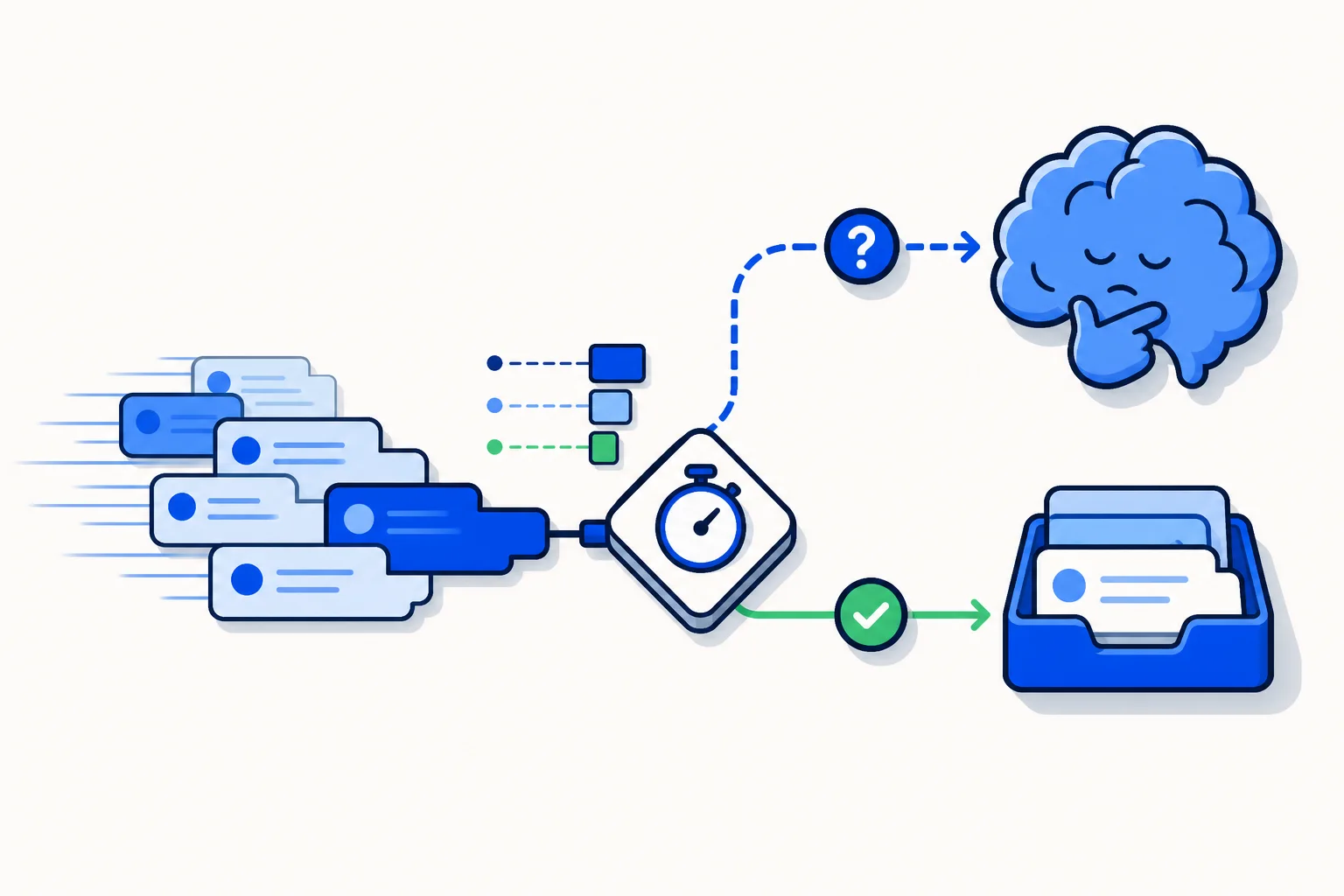
Jev skips the writing. You send it a state, which can be plain text or JSON, plus one or more typed questions, and it returns typed answers directly. TypeSafe exposes three primitives: Choice picks one option from a list, Score rates something against a criterion, and Noul answers true or false. Every answer comes with a calibrated probability, so your code knows not only what the model chose but how sure it is. All the questions in a request are evaluated in a single pass, and because nothing is generated, the output cannot be malformed.
The numbers behind the launch
Pricing: 0.042 dollars per million input tokens. Output is free, since there are no output tokens to bill.
Latency: 70 to 500 milliseconds end to end, which is fast enough to sit inside a request instead of behind a queue.
Training: a method TypeSafe calls Reinforcement Learning for Calibrated Decisions, or RLCD, aimed at making the probabilities mean what they say.
Name: a nod to William Stanley Jevons, the economist behind the Jevons paradox, where a falling cost of a resource increases its total use. System One refers to fast, intuitive thinking, as opposed to slow deliberation.
Independent write-ups since the launch have reported accuracy on classification tasks on par with frontier LLMs at a small fraction of the cost per decision. As with any new model, the right move is to test it on your own data, but the shape of the claim is consistent across the coverage: a narrow model that is very fast and very cheap at the one thing it does.
How it is meant to be used
TypeSafe does not position Jev as a replacement for a large language model. The recommended pattern is to put Jev in front of one. Jev handles the first question about every input: what is this, how urgent is it, which path should it take, is it safe to automate. When the confidence is high, the system acts on that answer directly. When the confidence is low, the input is escalated to a large model, or to a person, with the uncertainty attached. The expensive, slow model is reserved for the cases that need it.
That pattern is familiar to anyone who has built a support or sales AI agent. The hard part was never writing the reply. It was deciding, quickly and reliably, what kind of conversation this is and what should happen next.
What this means for AI customer communication
Businesses that run AI conversations on WhatsApp, web chat or email make hundreds of small decisions per hour that are not about writing. Here is where a decision model changes the economics:
Faster routing. Deciding whether a new message belongs to sales, support or billing, and which team or AI agent should take it, can happen in well under a second and before any reply is drafted.
Cheaper classification. Labelling every incoming conversation by intent, language, sentiment or urgency used to cost a full LLM call each. At fractions of a cent per million input tokens, labelling everything becomes the default rather than a sampling exercise.
Confident automation. Calibrated probabilities let an AI agent act on its own only when it is sure, and hand over to a person, with context, when it is not. That is the difference between automation customers tolerate and automation they trust.
Guardrails on actions. Before an AI agent creates a ticket, shares a payment link or books a slot, a yes/no check with a confidence score is a cheap place to catch mistakes.
A practical way to think about it
Picture a WhatsApp line for a clinic. Every message first passes a decision layer: is this an appointment request, a question about prices, a complaint, or something else; is it in Spanish or English; is it urgent. High-confidence appointment requests go straight to the booking flow. Price questions go to the AI agent that knows the price list. Complaints and anything uncertain go to a person with the classification attached. The large model still writes the replies that need writing. It simply stops being asked to do the sorting.
This is the direction the whole field is moving: fewer monolithic calls, more small, well-defined steps, each handled by the tool that does it best. HellouOne already works this way at the product level, with an AI agent that answers first and escalates to a human with context when needed. Models like Jev make the decision steps underneath that kind of system faster, cheaper and more measurable, which is good news for every business whose customers live in a chat window.