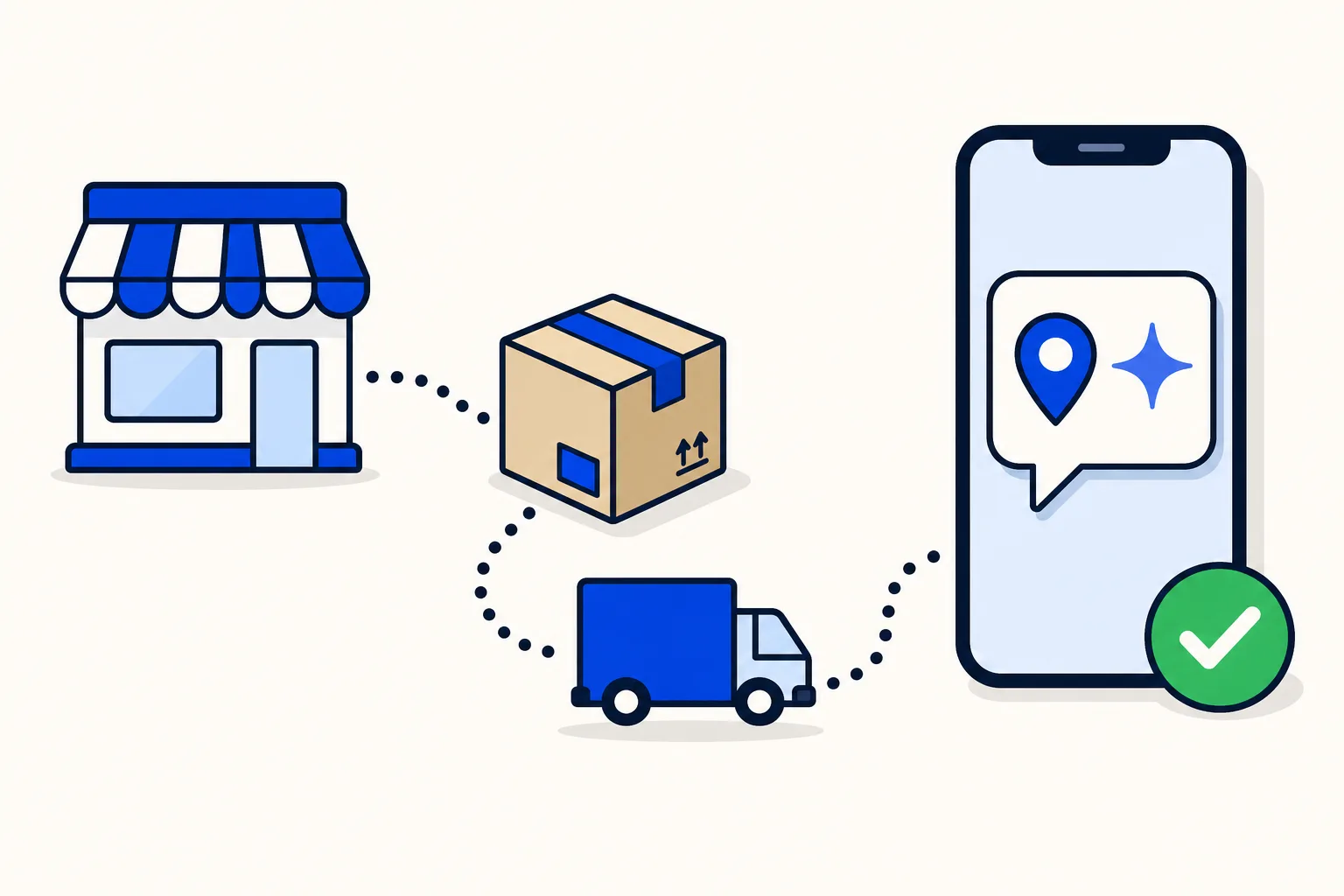
If you run an online store, you already know the message. "Hi, I ordered last week, where is my package?" It arrives on WhatsApp at 9 pm, again at 7 am, and in between while you are packing boxes. The customer is not angry yet. They just want a date and a tracking link.
Support teams call this WISMO, "where is my order", and in most stores it is the most repeated question. Each of those chats means someone opens Shopify or WooCommerce, finds the order and pastes the tracking status back. It is a lookup, not a conversation, and an AI agent connected to your store can take it over. This post covers what the agent can and cannot answer, how a typical chat goes, how to set it up, and what WhatsApp's rules mean for post-purchase messages. It builds on the WhatsApp AI agent guide.
Why does "where is my order" eat so much support time?
The problem is not the difficulty of the question. It is the volume and the timing.
It arrives in bursts. A promotion or a courier delay turns one question into fifty identical ones in an afternoon.
It arrives outside hours. People check on packages at night and on weekends. By morning there is a queue of identical replies to send.
It hides the chats that matter. A damaged item or a refund request sits in the same inbox as thirty tracking questions and gets answered later than it should.
Shopify's own documentation on order status treats payment status and fulfillment status as separate things, and WooCommerce lists its order statuses from "Pending payment" to "Completed". A customer asking "where is it?" wants the fulfillment side: shipped or not, with whom, and when it lands. An agent reads those fields directly; a person reads two screens first.
What can an AI agent actually answer from your store?
An AI agent is only as useful as the data it can reach. Connected to your store through HellouOne's integrations, it can do the following.
Shopify. Order status and product questions answered from your store data. The agent looks up an order by number or by the customer's phone and reports its status, and it answers product and stock questions from the catalog.
WooCommerce. Order lookups for WordPress stores: the agent finds the order and reports its shipping status.
What the connectors do not do is worth saying out loud: the agent does not process returns or refunds, change an order, or run abandoned-cart campaigns. Those belong to a person or to your store's own tools. For a WooCommerce store, product questions are answered from whatever knowledge you give the agent (your pages, PDFs or plain text), not from the store connection.
The agent handles the lookup; the people handle the judgment.
How does a typical order-tracking conversation go?
Three patterns cover almost every chat a store receives after a sale.
"Where is my order?" The customer writes from the phone they used at checkout, or gives an order number. The agent finds the order, reads its fulfillment status and replies with what matters: it has shipped, here is the carrier and tracking reference, here is the expected window based on the shipping times you gave it. If it has not shipped yet, it says when it will.
"Does this come in blue? Is it in stock?" On Shopify, the agent answers from the catalog: variants, availability, the basics of the product page.
"It arrived damaged" or "I want my money back." The agent does not argue and does not promise. It hands the conversation to a person with the order already identified and the customer's message and photos attached. The person opens the chat already knowing what went wrong.
The handoff is what makes this safe. WhatsApp's Business Messaging Policy requires automated flows to offer "prompt, clear, and direct escalation paths" to a human. The full set of triggers is in AI-to-human handoff on WhatsApp: the rules that work.
How do you set it up?
Most of the setup time goes into writing down the policies your team keeps in its head.
Connect the store. From the integrations screen, connect Shopify or WooCommerce. Once it is on, the agent can look up orders.
Give the agent your shipping facts. Processing time before dispatch, carriers by region, delivery windows, cut-off hours, and what to say when a package is late. The connector gives the agent the order's status; your instructions tell it how to explain that status.
Give it your policies. Return window, exchange rules, who pays return shipping, and what the agent should never promise. "We cannot replace an item until the return is received" is a sentence it should know before the first customer asks.
Set the handover rules. Refunds, damaged or missing items, a customer who asks for a person, and any question outside the knowledge you gave it. Each goes to a named team, not a generic queue.
Test with real orders. Write to your own number with an order number, a phone lookup, a product question and a complaint. Fix what reads wrong, then go live.
What do WhatsApp's rules mean for post-purchase messages?
The lookups above happen inside a conversation the customer started, so they fall inside WhatsApp's 24-hour customer service window. There, since October 1, 2026, Meta bills free-form replies per message after the first 1,000 per phone number per month, as described in Meta's documentation on non-template message pricing. A store that answers "where is my order" in one or two complete replies stays well inside that allowance.
Messages your store starts are different. A shipping confirmation or an "out for delivery" notice sent when the customer has not written in the last 24 hours must be a pre-approved template. Meta prices templates by category and by the recipient's country, and shipping notifications belong in the utility category, the cheaper band. The rates by market are on Meta's WhatsApp Business Platform pricing page.
Two practical points follow.
Consent. A notification to a customer's WhatsApp requires that they agreed to receive it, for example by opting in to updates at checkout. Treat shipping notifications as something the customer asked for, not a default.
Volume. A template is a cost per message delivered. One shipping confirmation and one delivery notice per order is useful; a notice at every scan event is not.
Can the agent help with reorders and payments?
Yes, within limits. With Stripe or Mercado Pago connected, the agent can generate a payment link for an agreed amount inside the conversation and confirm when the payment lands. For a store, that fits a repeat purchase ("same as last time") and a balance due before dispatch. The agent is not a checkout; it sends a link and the conversation records the payment. Timing and wording are covered in WhatsApp payment reminders with Stripe or Mercado Pago links.
How do you measure whether it is working?
Three numbers in the reports matter in the first month.
Conversations resolved by the agent versus handed to a person. Label the handoffs by reason (refund, damaged, outside knowledge). If "outside knowledge" grows, the fix is more material for the agent, not more people.
First response time, inside and outside business hours. The point of the agent is that the 9 pm question gets its answer at 9 pm. Compare the heat map of when customers write with when they are answered.
Customer satisfaction on handed-over chats. The people now spend their time on the hard cases. CSAT on those tells you whether the split is right.
A handoff share near zero usually means a rule is too loose; one that climbs week over week means a gap in the knowledge base.
How this works in HellouOne
HellouOne ships 16 connectors, and Shopify and WooCommerce are two of them. The Shopify connector lets the AI agent look up an order by number or phone and report its status, and answer product and stock questions from your store data. The WooCommerce connector gives it order lookups and shipping status for WordPress stores. Both are switched on from the integrations page without a developer.
The AI agent runs natively inside HellouOne, with a visual editor, versions and handover areas. You define where the agent stops and a person starts, and the person receives the chat with everything the agent found, including the order it identified. Business hours are part of the agent, so an out-of-hours complaint gets an honest expectation instead of a promise. LIA, the in-app assistant, proposes changes to the agent's instructions from a plain-language request, you approve them, and every change is a version you can roll back.
Post-purchase templates live in the same account, and campaigns to customers who opted in show a cost estimate before anything is sent. Meta's fees are passed through with 0% markup. Stripe and Mercado Pago connectors send payment links inside the conversation, and reports by agent, team, label and conversation give you the resolved-versus-handed-over picture described above.
If you want to connect your own store events or build on the platform, the API and SDK are documented at one.hellou.ai/docs. The broader support use case is on the customer service page.
Start with the lookup. It is the question your customers ask most, and once it is handled, your team gets its afternoons back for the chats that need a person.