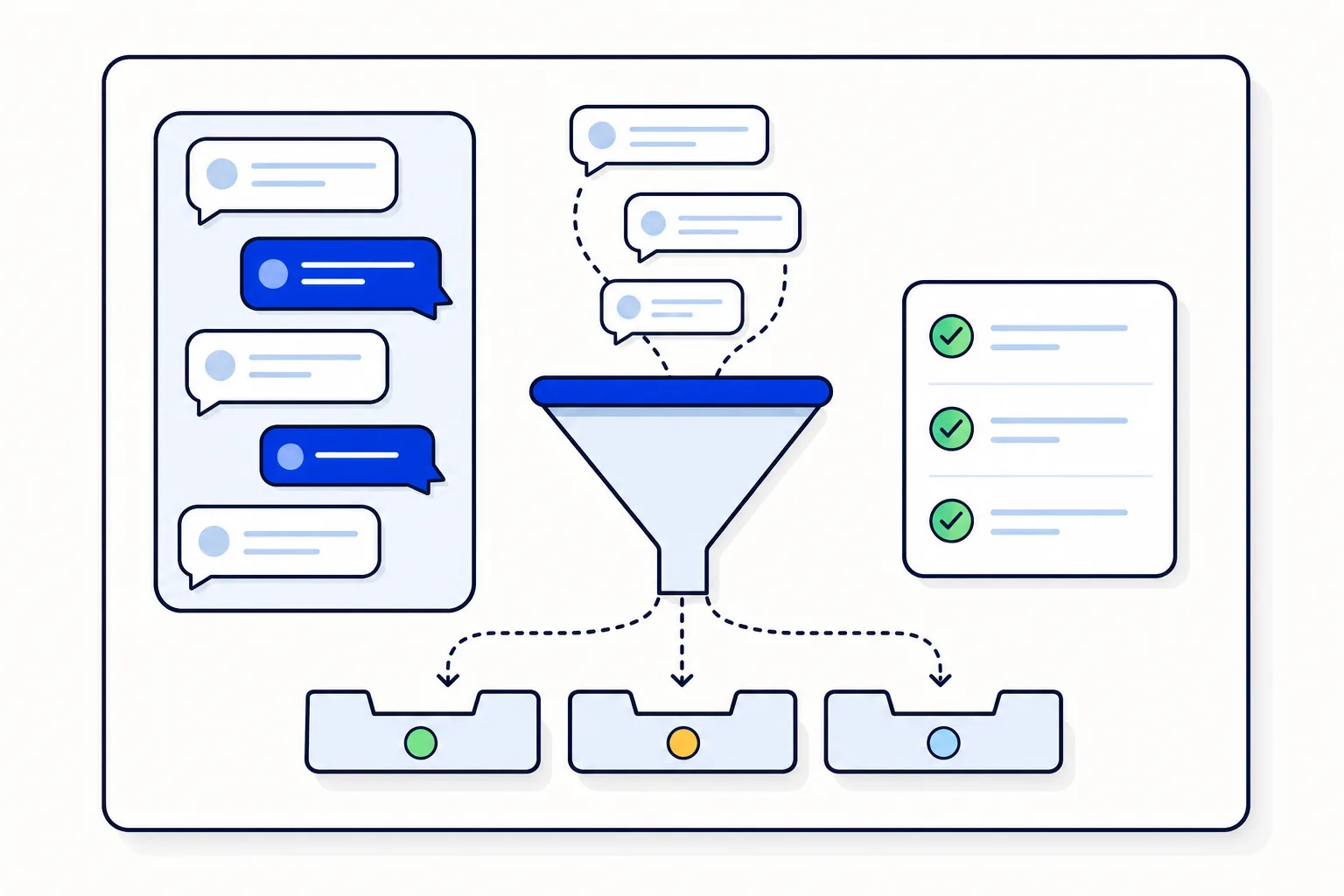
A lead writes to your WhatsApp number at 9:40 pm. Nobody answers until the next morning, and by then they have already talked to two other businesses. That is how most leads die on WhatsApp: the first reply came too late and the first questions were never asked.
An AI agent fixes the first half (the reply is instant, every day of the week) and can do most of the second: ask the handful of questions that tell you whether the lead deserves a salesperson's time, score it, and hand it over with context. Here is how a small sales team sets that up.
Why does reply speed decide which leads you qualify?
The most-cited research on this is the Lead Response Management study by James Oldroyd, which measured how the odds of reaching and qualifying a lead change with response time. Its headline finding: a business that replies within 5 minutes is far more likely to make contact and qualify the lead than one that replies after 30 minutes.
WhatsApp raises the bar (people expect chat-speed replies and message three businesses in a row) but also removes the friction: no form, no email thread, no phone tag. If something answers in seconds, you are inside the 5-minute window every time, including weekends.
That "something" used to be a rigid menu ("reply 1 for sales"), and it collected almost nothing useful. An AI agent trained on your business information holds a normal conversation, answers the lead's first questions, and works your qualifying questions into it instead of running an interrogation.
What does "qualified" mean for a small business on WhatsApp?
Enterprise sales teams use BANT: budget, authority, need, timing. For an SMB on WhatsApp the four ideas hold, but the wording has to shrink to something a person will answer with their thumb while waiting for a bus:
Need: what do they actually want, and does your business sell it?
Timing: this week, this month, or "just looking"?
Budget: not "what is your budget?" but a range, a tier, or a yes/no on your starting price.
Authority: are they deciding for themselves, or asking on behalf of a boss, a partner or the family?
Two rules make the script work. Ask at most 4–6 questions, one per message. And answer the lead's questions first: someone who asks "how much is it?" and gets "what is your budget?" in return feels processed, not helped.
Which questions should the AI agent ask?
This script fits most service and retail businesses. The AI agent should not read it like a form; it picks the next unanswered question and asks it naturally after dealing with what the lead just said.
Need: "Happy to help. So I point you to the right option, what are you looking for: X, Y, or something else?"
Timing: "When are you hoping to have this sorted: this week, this month, or are you still comparing?"
Budget: "Our [service] starts at $X. Does that range work for you, or should I show you other options?"
Authority: "Are you the one deciding on this, or is someone else involved I should keep in mind?"
Contact: "If a colleague needs to call you, is this number the best one, and what name should they ask for?"
The budget question, phrased as a price with a yes/no, qualifies without making anyone say a number out loud; the authority question tells the salesperson who else to bring into the deal. Tell the AI agent in its instructions what to do with each answer: keep going, tag the lead, or hand it over. That is the scoring step.
How do you score a lead as hot, warm or cold?
Keep three buckets. Anything finer gets ignored by a team of four.
Hot: a clear need you sell, timing this week or this month, budget confirmed or no objection, and the lead is the decider. Example: "I need 20 uniforms for my restaurant by the 25th, your price works."
Warm: need and timing fit, but one piece is missing: budget unanswered, they must check with someone, or the timing is "next month or so".
Cold: no clear need, "just looking", a budget far below your starting price, or a request for something you do not sell.
Write the criteria as plain sentences in the AI agent's instructions, with one example per bucket, and tag the conversation so anyone opening the inbox sees the label before reading a line. Cold leads are not lost: the AI agent can answer their questions, send the price list and close politely. Warm leads get a follow-up a few days later. Hot leads go to a person immediately.
When should the AI agent hand the lead to a person?
Handover should be a rule, not a feeling. Write down the triggers and where each one goes:
Hot lead → sales team, straight away, even outside hours.
Lead asks for a discount, a custom quote or payment terms → a salesperson; the AI agent should not negotiate prices.
Lead asks to speak to a person → a person, with no "are you sure?".
Complaint or an existing-customer issue arriving on the sales number → support team.
A question the AI agent cannot answer from your business information → whoever owns that topic.
Warm leads can wait with the AI agent until a salesperson has capacity. We go deeper into trigger lists in AI-to-human handoff on WhatsApp: the rules that work.
The handover message matters: "I'm passing you to Laura from our team; she has everything you've told me, so you won't need to repeat it." And once a person takes over, the AI agent should stop answering.
What does the salesperson see when the lead arrives?
Qualification means the salesperson starts from the middle, not from zero. When the conversation lands in their queue they should have:
The full chat history, including every answer to the script, in the same thread.
The lead's tag (hot, warm or cold) and the source (which ad, which page).
A private note with the key facts: "20 uniforms, deadline 25th, decider, budget OK". Private notes are visible to the team and invisible to the customer.
An @mention when someone specific needs to look: "@Carlos, this is the client who asked about embroidery."
The first human message can then be "Hi, I'm Laura. Let's get those 20 uniforms sorted for the 25th", and the lead feels remembered instead of re-processed.
How do you keep the CRM in sync?
A qualified lead that lives only in a chat app is a lead you will lose by the end of the quarter. The CRM needs the contact, the qualification (tag, answers, source) and the conversation itself, so that reports and follow-ups run from the system of record.
Two-way sync matters: it means a deal moved in the CRM shows the same state in the inbox, and a tag set in the inbox lands as a field in the CRM. For a small team the sync should be a native connector, not a weekend of scripts.
What about leads from click-to-WhatsApp ads and Facebook Lead Ads?
Paid leads are the most expensive ones you have, and they go cold the fastest:
Click-to-WhatsApp ads: the lead opens a chat from the ad. The AI agent should greet with the ad's context ("Thanks for your interest in the spring offer") and start the script right away.
Facebook Lead Ads: the person filled in a form and never opened a chat. Here the business sends the first message, by WhatsApp template, within minutes of the form landing. We covered the mechanics in Automatic WhatsApp first touch for every Facebook lead; the form answers pre-fill part of the script, so the AI agent asks only what is missing.
How this works in HellouOne
HellouOne is a WhatsApp team inbox with AI agents built in, so the steps above are configuration rather than a project:
The WhatsApp AI agent is trained on your business information and takes the script as plain-language instructions. It answers the lead's questions and asks yours, one at a time.
Handover areas route the conversation from the AI agent to a team by rule: hot leads to Sales, complaints to Support, price negotiation to a person. Assignment rules then pick the salesperson.
AI classifications (Growth plan and up) tag conversations automatically, so hot, warm or cold and the lead's intent are set without anyone typing a label.
The salesperson gets the whole thread, private notes and @mentions in the same inbox.
Two-way CRM sync with HubSpot, Pipedrive, GoHighLevel and DataCRM keeps contacts, tags and conversations aligned with your pipeline; the full list is on the integrations page.
Facebook Lead Ads get an automatic WhatsApp first touch, so paid leads enter the script inside the 5-minute window.
Plans start at $49/month on Starter (one human agent, 2,000 AI messages), and every plan includes a 7-day free trial with no card. The sales goal page shows the setup end to end, and Human + AI explains how the AI agent and the team share one conversation.
Where should you start this week?
Write the 4–6 questions in your own words, define hot, warm and cold in three sentences, and list the handover triggers with the team each one goes to.
Connect the CRM before the first lead, not after the hundredth.
Review after a week: how many leads got a reply within 5 minutes, how many were tagged hot, and how many of those a salesperson closed.